In the News: Lawsuit alleges the government is illegally garnishing tax refunds of student-loan borrower

June 20, 2019

By Jillian Berman

For MarketWatch
For the past few years, the government has been taking pains to collect on Tamara Blanchette’s student loans — garnishing some of the money she receives through her tax refund.

But it’s debt the government shouldn’t be collecting on in the first place, a new lawsuit alleges.

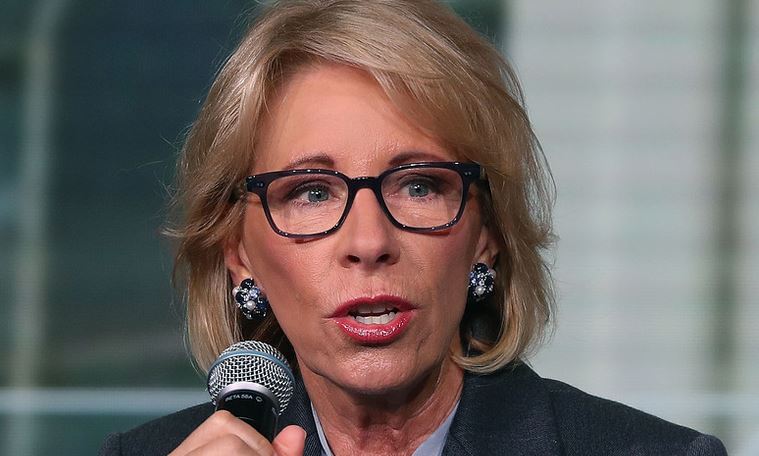
The suit, filed on behalf of Blanchette and similarly situated borrowers, alleges that Betsy DeVos and the Department of Education are collecting on debt that isn’t legally enforceable.

That’s because the Department knows that Blanchette and other students who enrolled in the criminal-justice program at the Minnesota School of Business, a now defunct for-profit college chain, were defrauded by the school when they signed up for the program, according to court documents.

For more information click on link below:

https://www.marketwatch.com/story/lawsuit-alleges-the-government-is-illegally-garnishing-tax-refunds-of-student-loan-borrowers-2019-06-19

In The News: To Begin Solving Student Debt, the Education Department Must Factor In Race and Ethnicity

June 18, 2019

By Victoria Yuen

Center for American Progress


In fall 2017, the U.S. Department of Education released shocking findings about the long-term outcomes of student borrowers of color, particularly those who are black or African American. The data showed that the average black or African American borrower who entered college in the 2003-04 academic year had made no progress paying down their debt by 2015; in fact, they owed more than they originally borrowed. Even worse, nearly half of black or African American student borrowers had defaulted on their loans within the 12-year time period. These findings revealed a repayment crisis for black borrowers and raised serious questions about how the American higher education system serves all communities of color.

But the data have not yet led to any major plans in Congress to improve the outcomes of student borrowers of color. Just last month, for example, front-page headlines trumpeted a wealthy financier’s pledge to pay the student loan debt of an entire graduating class at historically black Morehouse College, demonstrating anew how much student debt is still weighing down African American borrowers—and why these students need systemic solutions.

Click on the link below to read more:

https://www.americanprogress.org/issues/education-postsecondary/news/2019/06/18/470750/begin-solving-student-debt-education-department-must-factor-race-ethnicity/

In the News: Battle Lines Drawn on a Student Loan Alternative

June 13, 2019

By: Andrew Kreighbaum

Inside Higher Ed

Senator Elizabeth Warren and other congressional Democrats delivered a warning on Tuesday about the potential dangers of income-share agreements, an alternative form of college financing increasingly popular with some critics of student loans. The lawmakers’ primary target was the Trump administration — which has expressed interest in experimenting with the agreements — but the shot across the bow also aimed at colleges operating their own ISA plans.

Income-share agreements offer students financial support up front and in exchange require them to repay a portion of their income for a set number of years. They first caught on at coding boot camps and similar programs that don’t receive federal student aid. But a handful of four-year colleges have begun offering their own ISA plans and, last month, the Trump administration said it planned to pursue a federal experiment to offer income-share agreements to students.

Click link below to read more:

https://www.insidehighered.com/news/2019/06/05/democrats-take-aim-student-loan-alternative-and-colleges-offer-income-share


In The News: At HBCUs, crushing student loan debt is a symptom of even bigger problems

June 11, 2019

By Dartunorro Clark

MSNBC News

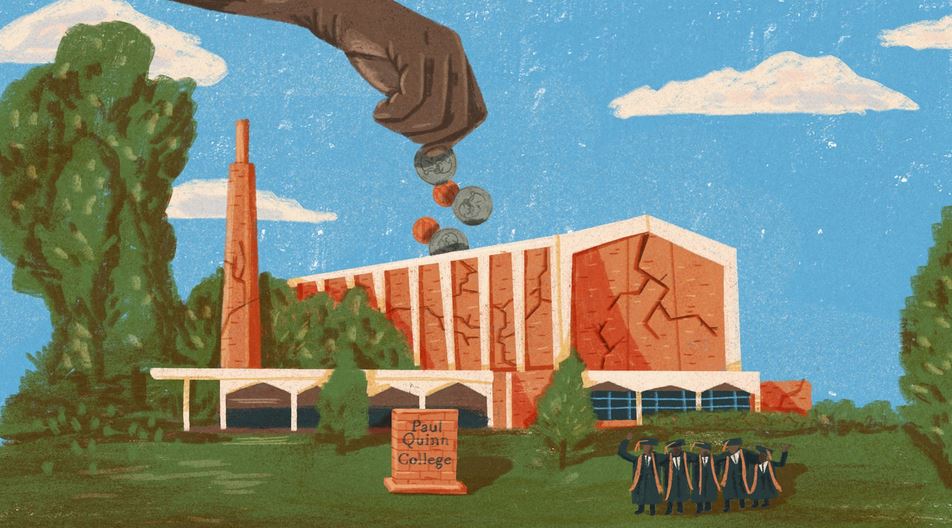
When Michael Sorrell became president of Paul Quinn College 12 years ago, he assessed the dire situation his school was in and made a bold choice: No more football.

“I mean, we’re in Texas. We’re an HBCU in Texas,” Sorrell said. “I got a little flak for that, OK?”

But to him, eliminating the program was the only way the historically black college in Dallas, which was founded in 1872 by a group of preachers from the African Methodist Episcopal Church to educate freed slaves and their children, could get back on track.

Football had cost the school roughly $600,000 to $1 million a year, he said, and scholarships went mainly to the players. Meanwhile, other students struggled, faculty and staff members were leaving, and buildings had fallen into disrepair.

“We were roughly 18 months to 24 months away from closing. We had financial problems. We had academic problems. We had morale problems, and it was the prototypical scenario for an institution that had been struggling for a long time and the end of the road was coming,” he told NBC News in a phone interview.

The challenges Paul Quinn College faced are not unique, experts said, even if its solution was one of a kind.

Click link below to read more:

https://www.nbcnews.com/politics/politics-news/hbcus-crushing-student-loan-debt-symptom-even-bigger-problems-n1014171


In the News: Education company Chegg is helping pay down its employees’ student loan debt. ‘They are creating value for us’

June 7, 2019

— CNBC’s Annie Nova contributed to this report.

https://www.cnbc.com/amp/2019/06/06/chegg-is-helping-pay-down-its-employees-student-loan-debt.html

Chegg has a new plan to help its employees deal with their student loans.

And its CEO wants other companies to follow Chegg’s lead.

The student-connected learning platform announced a new program Thursday that will give its entry- through manager-level workers up to $5,000 a year, if they have been with the company at least two years. Director- or vice president-level employees can get up to $3,000 annually to help pay down their student loan debt.

“Corporations need to play a role here,” Chegg CEO Dan Rosensweig told CNBC’s “Closing Bell” on Thursday.

“We are the beneficiaries of those people who have gotten an education — doesn’t matter if it is four year or two year or even if they completed it,” he added. “If they borrowed money and they are creating value for us, we want to help them.”

Student loan debt has hit record levels, with borrowers owing a total of $1.5 trillion. About 7 in 10 college graduates have education debt.

“We are taking our most vulnerable, least financially stable and we’re creating a burden on them that is unsustainable.” -Dan Rosensweig, Chegg CEO

Many also are unable to find ways to pay their bills. More than 1 million borrowers go into default each year. By 2023, its projected that 40% of borrowers may default on their student loans.

Chegg’s latest benefit is in addition to the $1,000 cash that its employees with student debt already receive each year. To pay for the program, called Equity for Education, Chegg created an equity pool from its existing stock.

“We’ve got a mess and it’s probably the biggest economic crisis facing this country. And we don’t deal enough with it,” Rosensweig said.

The Santa Clara, California-based company certainly isn’t the only business helping workers with some sort of student loan debt assistance.

Student loan debt

Getty Images

Last year, Fidelity began to offer companies a way to contribute to their employees’ education debt with its Student Debt Employer Contribution program. It now has more than 65 companies that are offering, or in the process of offering, the benefit.

“A growing number of companies are increasingly aware that helping their employees take on the issue of student debt can help improve their overall financial wellness, which can in turn have a positive impact from a business perspective in a host of ways,” said Asha Srikantiah, head of Fidelity’s Student Debt Employer Contribution.

In fact, Fidelity has already seen an improvement in attracting and keeping top talent since it started offering the program to its own employees in 2016.

“For eligible Fidelity employees from 2016-2018, we’ve seen an approximate 75% reduction in turnover in the first year of program participation,” Srikantiah said. “And, according to a recent internal survey, it’s among the top two reasons people decided to join Fidelity.”

Still, the companies that offer this type of benefit remain the minority. About 4% did so in 2018, according to the Society for Human Resource Management.

Chegg’s CEO said his company thought long and hard about how to come up with a program that other companies can copy.

“We wanted to see if we could set an example and create a dialogue,” Rosensweig said.

He’s also hoping the government and colleges take notice of Chegg’s plan and do their part to help with the crisis.

“We are taking our most vulnerable, least financially stable and we’re creating a burden on them that is unsustainable,” Rosensweig said.


In The News: The average millennial has a net worth of $8,000. That’s far less than previous generations.

June 5, 2019
By Abha Bhattarai for Washington Post

Millennials are doing far worse financially than generations before them, with student loans, rising rents and higher health-care costs pushing the average net worth below $8,000, a new study shows.

The net worth of Americans aged 18 to 35 has dropped 34 percent since 1996, according to research released Thursday by Deloitte, the accounting and professional services giant. This demographic is paying more for education and such basics as food and transportation while incomes have largely flatlined.

“The vast majority of consumers are under tremendous financial pressure,” said Kasey M. Lobaugh, Deloitte’s chief retail innovation officer and lead author of the study. “That is particularly true for low-income Americans and millennials.”

The growing gap between the nation’s wealthiest residents and everybody else, he said, is affecting the way consumers spend…

Click link below to read more:

https://www.washingtonpost.com/business/2019/05/31/millennials-have-an-average-net-worth-thats-significantly-less-than-previous-generations/?noredirect=on&utm_term=.269c9363005d

They’re lawyers, scientists and health care professionals. They’re also still struggling to pay off their student loans

June 3, 2019

(CNN)You’ve might have heard the statistic. As many as 45 million Americans have student loan debt — amounting to about $1.49 trillion total.

Sen. Elizabeth Warren has proposed eliminating the student loan debts of tens of millions of Americans, which her campaign says would be financed by a proposed wealth tax. She’s been promoting her plan by encouraging people to share their experiences on Twitter with the hashtag #CancelMyDebt.
CNN reached out to some of these people, and they all agreed on one thing. They’re tired of others telling them they should have made better decisions, because they think the current system has set them up to fail. Here’s what they said…
Click link below to read more:

https://www.cnn.com/2019/06/01/us/student-loan-debt-stories-trnd/index.html?no-st=1559569860